 Free quote
Clackamas County
Gutter cleaning, roof and moss treatment and house washing for Brightwood homes and cabins under heavy fir canopy. Local, free quotes.
Brightwood is where we are based, and it is also the hardest place on the corridor to keep a house clean. Not because anything is wrong with the houses — because of the trees. Brightwood sits under genuinely dense Douglas fir and western hemlock, on the flat along the Salmon and Sandy rivers, and that canopy is the entire story of exterior maintenance here.
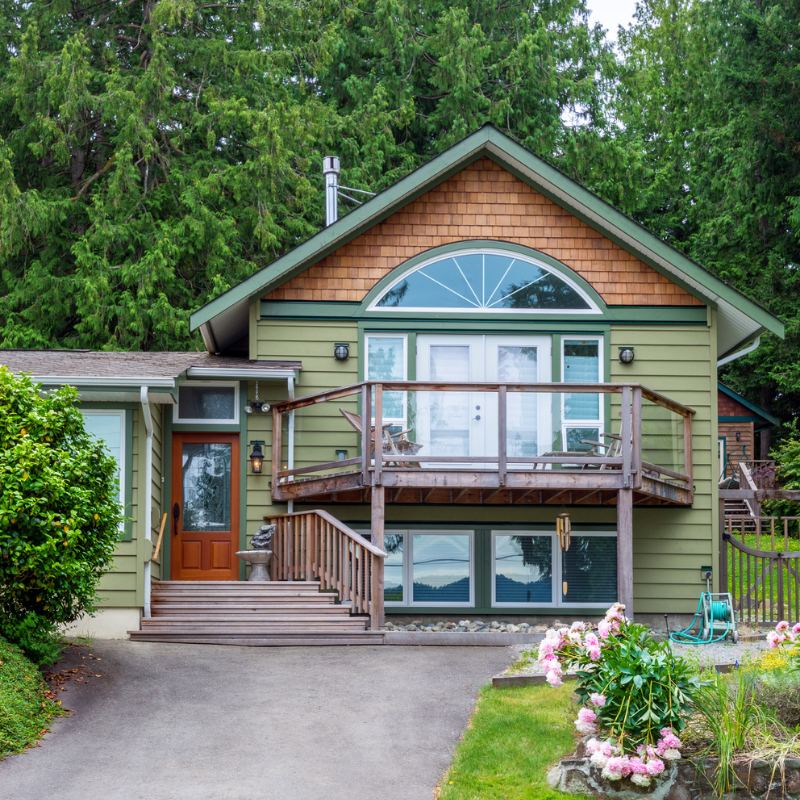
A property in open ground gets a leaf fall. It is annoying, it happens in October, and then it is over.
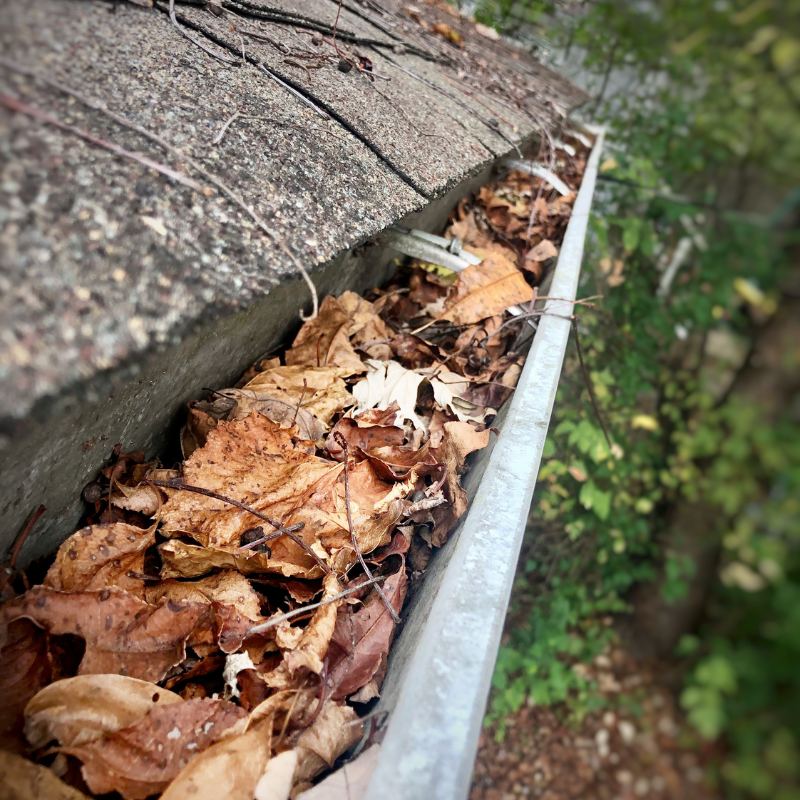
Conifers do not work that way. Firs shed needles year round, heaviest in late summer and autumn but never stopping, and hemlock drops fine needle litter continuously. A Brightwood roof is therefore never clean for long, and a Brightwood gutter starts refilling the day after it is cleared.
That changes the maintenance interval rather than the method. Houses here with large firs directly over the roofline frequently need gutters cleared three or four times a year, and once a year is not a schedule — it is a guarantee of overflow by month eight.
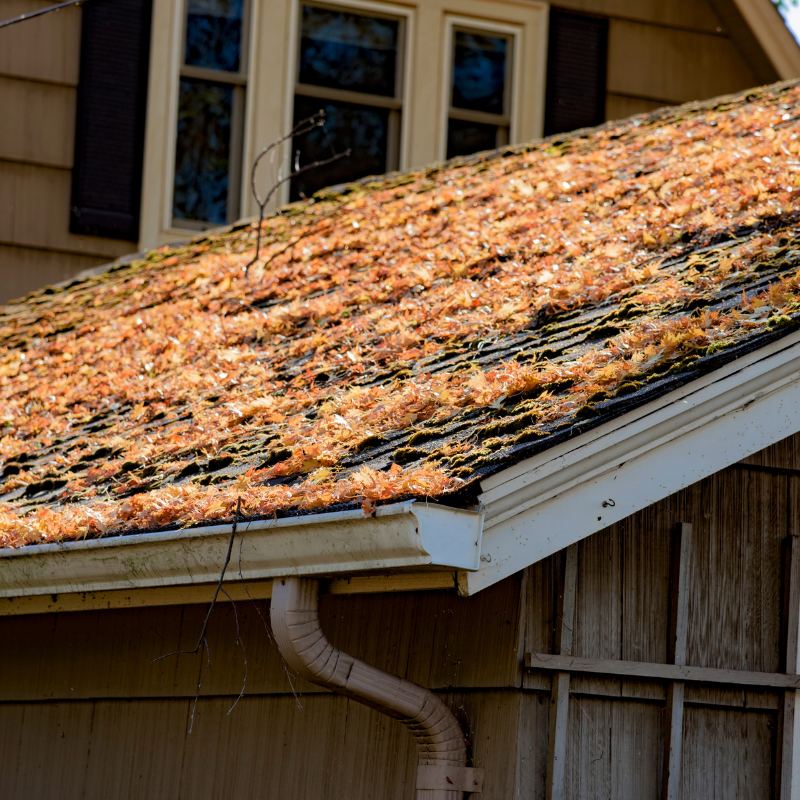
The other Brightwood factor is that it sits low, close to water, and shaded. Cool air settles, humidity stays high, and surfaces that would dry out in an afternoon somewhere else stay damp for days.
Moss follows directly from that. On Brightwood roofs it is not confined to the north slope the way it is further down the valley — plenty of properties here grow it on every aspect, because no aspect gets enough sun to matter. Decks stay green. North walls stay green. Concrete goes slick.
None of this means a Brightwood property is harder to look after well. It means the intervals are shorter and the jobs overlap, which is why most houses here are better served by one visit doing gutters, roof debris and hard surfaces together than by three separate call-outs across a year.
A lot of Brightwood property is not occupied full time. Cabins, family places used at weekends, and an increasing number of short-term rentals.
An unoccupied house accumulates at exactly the same rate as an occupied one and nobody is there to notice. The classic Brightwood failure is a downspout that plugged in September, overflowed all winter against the same three feet of fascia, and was discovered in spring as a soft patch. The house was fine in October and the repair is a carpentry job by April.
For a property you visit occasionally, a scheduled visit is worth more than it is for a house somebody lives in, because the early warning is the whole value.

Worth mentioning when you call: long gravel drives, soft ground in the wet months, trees close to the house, and outbuildings. None of it is unusual for us and all of it affects how a job is planned.
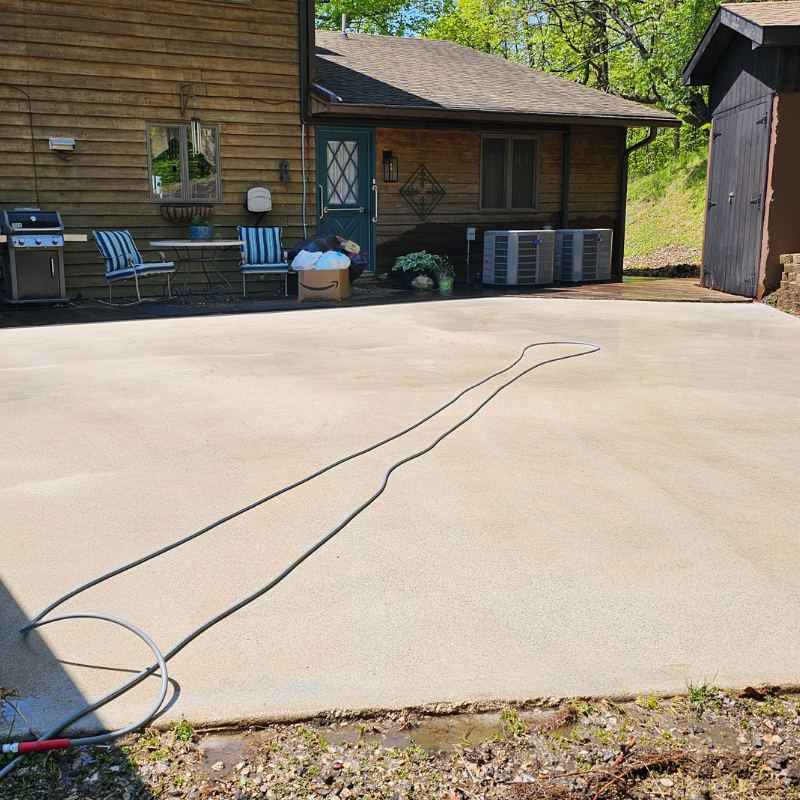
On the river flat almost every property has timber outside that never fully dries, and it ages differently from timber in the sun.
Decks grow a film that is slick within a season of being cleaned. Rails and steps go green on the underside first, where nobody looks. Retaining walls and the timber edging along drives hold moisture against the ground and rot from the bottom up. Concrete steps under trees are the genuinely dangerous one, because they are what people walk on in the dark carrying things.
These surfaces want doing on a shorter cycle than a house elevation, and they are the ones worth prioritising if the budget only stretches to part of the property in a given year. A green wall is an appearance problem. A green step is not.
On a Brightwood property that has not had attention for a few years, the pattern is consistent enough to predict.
Gutters full to the lip with compacted needle mat, usually with seedlings in at least one section. At least one downspout completely plugged at the elbow. Moss established along the lower courses of the roof and in the valleys. A north elevation with visible growth from the ground up to the eaves. Decking that has gone uniformly dark rather than dirty in patches.
None of that is unusual here and none of it means the house has been neglected — it is four or five years of normal accumulation under canopy. What matters is what has already happened underneath: whether the fascia is still sound where the water has been sitting, and whether any of the moss has started lifting shingle edges. That is what we look at first.
Under this much canopy the jobs are not really separate. The roof sheds needles into the gutter. The gutter overflows onto the walkway. The walkway grows moss because it is wet. Treating any one of those in isolation leaves the cause in place.
Doing gutters, roof debris and hard surfaces on a single visit costs less than three trips up a gravel drive, and each job makes the next one last longer — a cleared roof stops the gutters refilling immediately, and a gutter that drains stops the walkway getting soaked every storm.
We are based here, which is less of a marketing line than a scheduling advantage. A Brightwood job does not involve driving up the corridor, so small jobs are worth doing, a follow-up visit is not a production, and if something needs looking at between scheduled visits it is not a special trip.
It also means we have seen a lot of these houses. The roofs on this flat share a small number of designs and a small number of recurring problems, and knowing which one a property has before getting on the ladder saves everybody time.
Services
Neighborhoods: Wildwood, Salmon River
Reviews
Kris was easy to work with and quick to respond. We had him clean up our roof and clear out the gutters before the rain comes. He did a great job, communicated well, and best of all, we have a free flowing gutters now. Will definitely hire again.Jessica S.
Just had our roof cleaned by Kris Klug who owns "UNDER PRESSURE EXTERIOR CLEANING"! Highly recommend! Prompt! Courteous! Honest! And Reasonably priced!Steven G.
Oh my! Someone not on Mountain Time! Kris shows up and does a fantastic job! Hubby not on the roof this year, thank you Kris for your help!Cloanne G.
Good experience with UPMH, prompt response & fair price - roof and gutters now ready for winter. Would recommend !Miles W.
Professional estimate. Quick response. A fair price. We look forward to working with this company.Patricia E.
Reviews from Google · read them all
Nearby
Questions
More often than almost anywhere else we work. Two visits a year is the realistic minimum under canopy and three or four is common where firs overhang the roof. The first clean tells us which — if it comes out full after six months, that is your interval.
Because nothing dries. Elsewhere the south slope gets enough sun to keep growth down; on the Brightwood flat, under canopy and near the rivers, often no aspect does. It is normal here and it is treatable, it just needs doing on a shorter cycle than the label on a product suggests.
Yes, and they are a good share of the work here. We can arrange a schedule around when the place is used and send photos afterwards so you can see the condition without driving up.
Generally yes. Tell us what the access is like when you call, particularly in the wet months, and we will plan the visit accordingly.
Get in touch
Need help with your roof, gutters, exterior cleaning, or holiday lights? Call or send us a message and tell us a little about what you're looking for. We're happy to help!
Call (503) 272-1238