 Free quote
Clackamas County
House washing, gutter cleaning, roof moss treatment and paver cleaning for Happy Valley's hillside subdivisions and HOA neighbourhoods. Free quotes.
Happy Valley is mostly new. Hillside subdivisions climbing the buttes, houses built close together on graded lots, stone veneer and fibre-cement siding, paver driveways, and a homeowners' association attached to a large share of the streets.
That changes the question. In the corridor people call because something has gone wrong. In Happy Valley the usual job is keeping a house that is still fairly young from looking older than it is — and, often enough, from drawing a letter from the HOA.
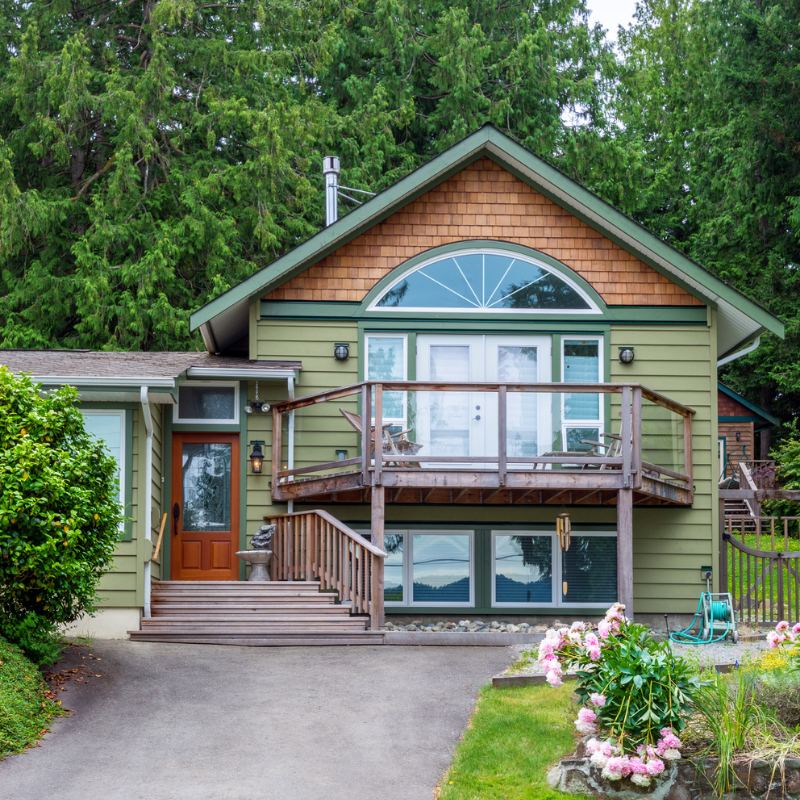
Plenty of Happy Valley associations have written standards on exterior appearance — mildew on siding, stained driveways, moss on the roof, that sort of thing. The detail varies by association and it is worth reading yours rather than guessing.
Exterior cleaning is one of the cheaper ways to answer a notice, and one of the few that can be done in a single visit. If you have a letter with a deadline on it, say so when you call. If you are on a board or a management committee and want common areas, entry monuments or shared walkways looked at, that is a conversation we are happy to have too.
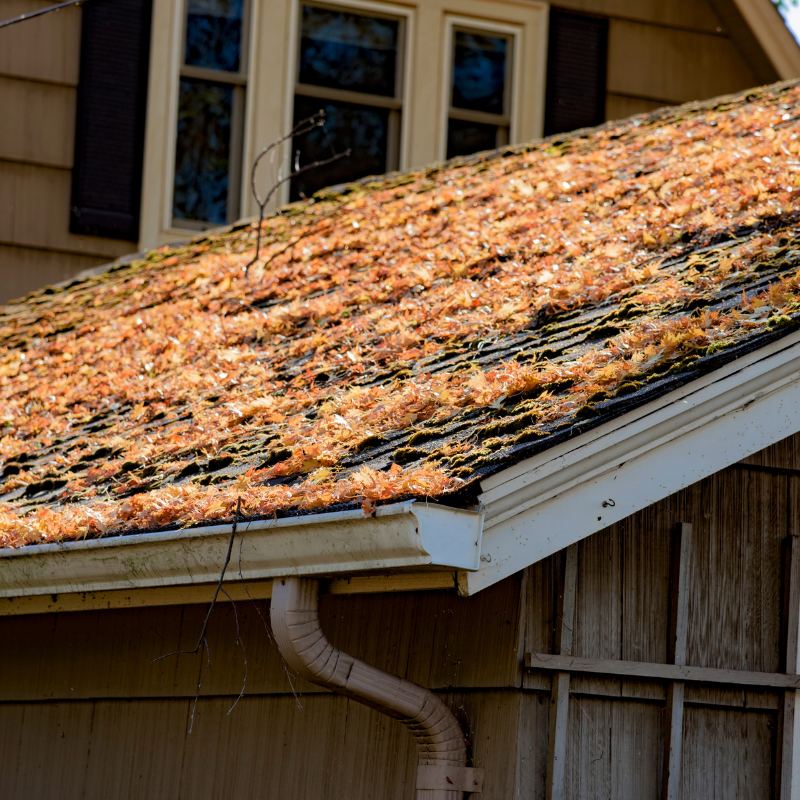
Most Happy Valley roofs are still well inside their working life, and that is exactly when moss treatment is worth the money.
On an older roof the question is sometimes whether it is worth cleaning at all. On a fifteen-year-old composition roof with the first patches of moss on the north slope, the answer is clearly yes: treat it while it is small, before it starts lifting shingle edges, and the roof gets to reach the end of its rated life instead of falling short of it.
The method is the same as everywhere we work. Clear what is sitting on the roof, treat the moss, let it die back and weather off. No pressure washing on shingles, ever. It strips the granules that protect the shingle from the sun, and a roof that has been pressure washed ages faster from that day on.
Happy Valley houses are frequently a storey taller at the back than at the front, because the lot was cut into the hill. The street side looks like an easy two-storey job. The rear can be three, standing on a terraced garden or a retaining wall.
Side yards between houses are often only a few feet wide, with a fence, a heat pump and a gas meter in them. That is fine, but it is the sort of thing worth knowing before a visit rather than discovering on the day. A quick note about the back of the house and any gates when you book saves time for everybody.

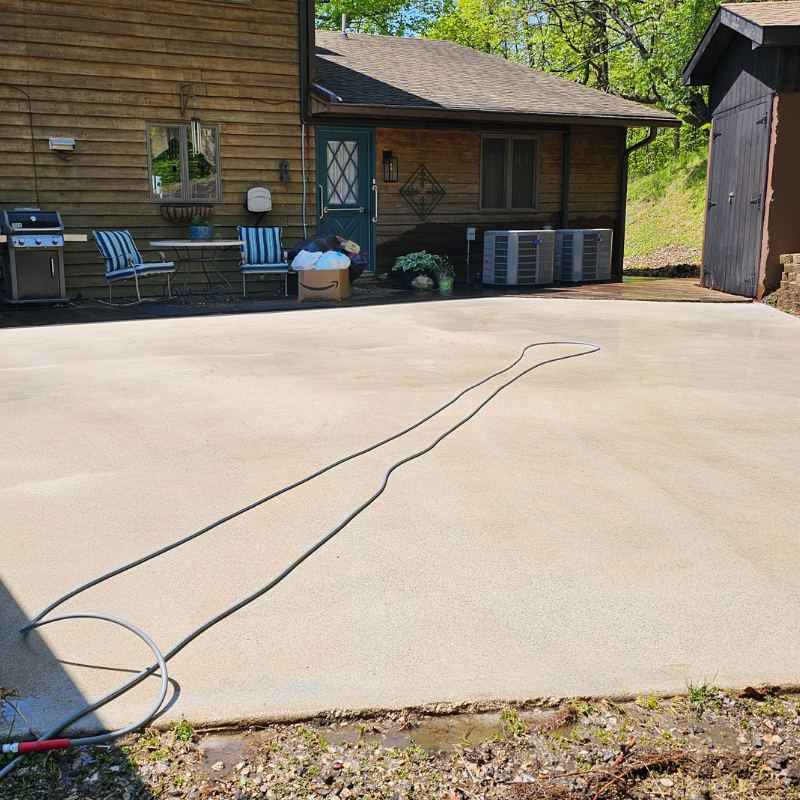
Newer Happy Valley houses have a lot of decorative hard surface: paver driveways, stamped concrete patios, stone steps, exposed-aggregate walks.
They need more care than a plain slab. Pavers sit on a sand bed and the joints are filled with sand or polymeric material, so turning the pressure up to maximum blows the joints out and leaves the surface loose. Stamped concrete usually has a sealer on it that can be damaged by the wrong approach. The work is done at the pressure the material calls for, and if joints or sealer need redoing afterwards we will tell you rather than pretend otherwise.
The surfaces that matter most for safety are the sloped ones. A steep driveway with a north-facing film on it is slick in the wet months, and Happy Valley has a lot of steep driveways.
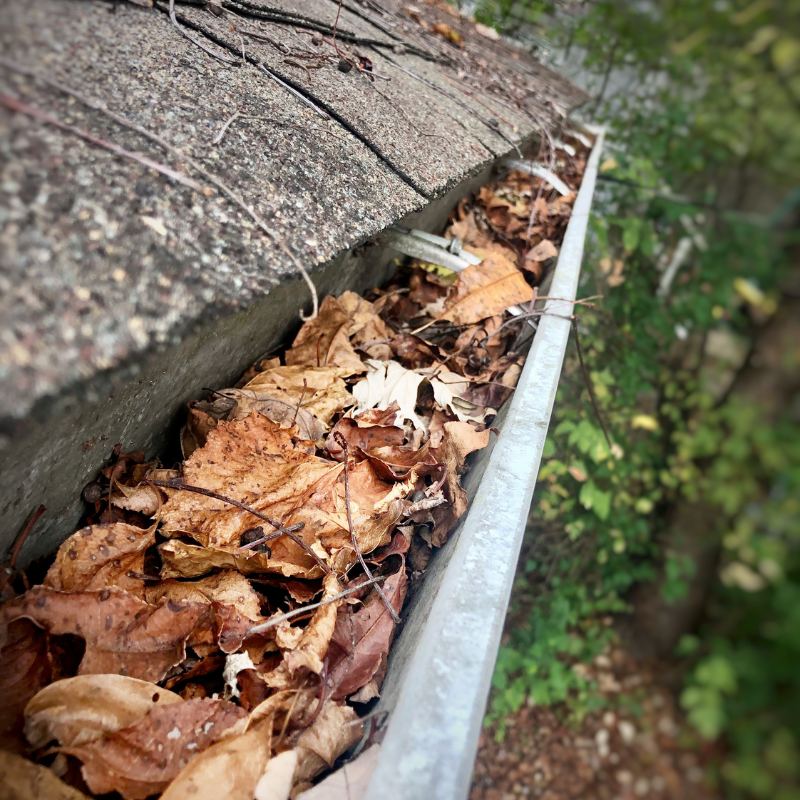
Gutter work in Happy Valley is usually lighter than up the mountain. Many streets have young landscaping and not much overhead canopy, so an annual clean is enough for a lot of houses.
The exceptions are the lots that back onto the wooded slopes of the buttes and the green spaces left between phases. Those can carry fir needles and a heavy autumn leaf drop onto one side of the roof, and a single blocked downspout on a three-storey rear elevation puts a lot of water in the wrong place.
Happy Valley has a lot of houses with long, visible rooflines facing the street, and on a hillside a lit house can be seen from a long way off. It is also exactly the kind of roofline that is unpleasant to do yourself — high at the back, a slope underfoot, and usually wet by the time anyone gets round to it.
If that is on your list, it can be quoted alongside the cleaning work.
Most houses here want the same small set of things on a sensible cycle: house washing for the shaded elevations, gutter cleaning once a year or twice if there are trees behind you, roof and moss treatment while the moss is still small, and pressure washing for the driveway, pavers and steps before the wet season. If the lights are on your list, see holiday light installation.
Quotes are free and done at the property. Call (503) 272-1238 or send the form and tell us roughly what you want looked at.
Services
Reviews
Kris was easy to work with and quick to respond. We had him clean up our roof and clear out the gutters before the rain comes. He did a great job, communicated well, and best of all, we have a free flowing gutters now. Will definitely hire again.Jessica S.
Just had our roof cleaned by Kris Klug who owns "UNDER PRESSURE EXTERIOR CLEANING"! Highly recommend! Prompt! Courteous! Honest! And Reasonably priced!Steven G.
Oh my! Someone not on Mountain Time! Kris shows up and does a fantastic job! Hubby not on the roof this year, thank you Kris for your help!Cloanne G.
Good experience with UPMH, prompt response & fair price - roof and gutters now ready for winter. Would recommend !Miles W.
Professional estimate. Quick response. A fair price. We look forward to working with this company.Patricia E.
Reviews from Google · read them all
Nearby
Questions
Because age has very little to do with it. The film that grows on a north elevation in the Portland metro is algae, and algae needs shade and moisture, not time. A brand-new house facing the wrong way on a hillside can show it within a couple of winters.
Happy Valley makes it more likely than flat ground does. Houses sit close together, so the side elevations get very little sun and very little air movement. A lot of lots back onto a slope or a stand of trees left between phases, so the rear wall is in shade for most of the day. Those are the surfaces that go first, and they are usually the ones nobody looks at until the neighbour mentions it.
The answer is a soft wash rather than a pressure washer. Fibre-cement and painted siding take a low-pressure treatment well; what they do not take well is someone with a rented machine and a narrow tip trying to blast the green off.
Usually less often than an older one, but new construction has its own quirks. Builders' debris, roofing offcuts and the odd bundle of packaging find their way into gutters, and a downspout that was never quite connected at the bottom can go unnoticed for years on a side of the house nobody walks.
For most houses, every couple of years for the whole exterior, with the shaded side elevations and the rear wall sometimes wanting it sooner. Houses with a wooded slope behind them sit at the shorter end of that.
No. Low pressure is the point. Stone veneer and fibre-cement both clean well with a soft wash, and both are easy to damage with a pressure washer held too close.
Yes. Tell us what the notice covers and when it is due, and we will quote against that. Shared areas for an association can be quoted separately.
Get in touch
Need help with your roof, gutters, exterior cleaning, or holiday lights? Call or send us a message and tell us a little about what you're looking for. We're happy to help!
Call (503) 272-1238