 Free quote
Clackamas County
Gutter cleaning, roof and moss treatment, house washing and pressure washing for Sandy, Cherryville and Bull Run homes and businesses.
Sandy is the hinge between the mountain and the valley, and its housing reflects that. Established streets near the centre with mature trees and older roofs, newer subdivisions on the edges with almost no canopy at all, and rural acreage out toward Cherryville, Bull Run and Marmot where properties get large and outbuildings multiply.
Those three are genuinely different maintenance problems, and the useful first question about a Sandy property is which of them it is.
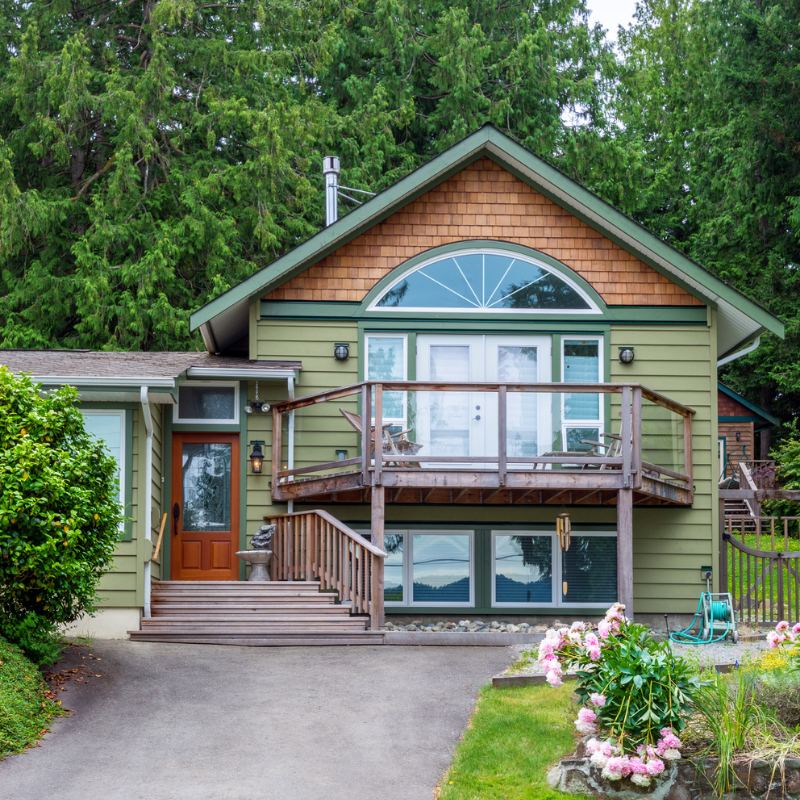
Sandy sits lower and more open than Brightwood or Welches. Surfaces actually dry here. South and west elevations get real sun for a real part of the year.
The practical effect is longer intervals. A Sandy house on an open lot can often run on an annual gutter clean where a Brightwood house needs three, and moss on the sunny elevations grows slowly enough that it is a periodic job rather than a standing one.
What does not change is the north side. Shade is shade, and a north elevation or a north roof slope in Sandy still grows the same green film as one further up. For a lot of Sandy properties the sensible arrangement is the whole house washed occasionally and the shaded elevations done more often.
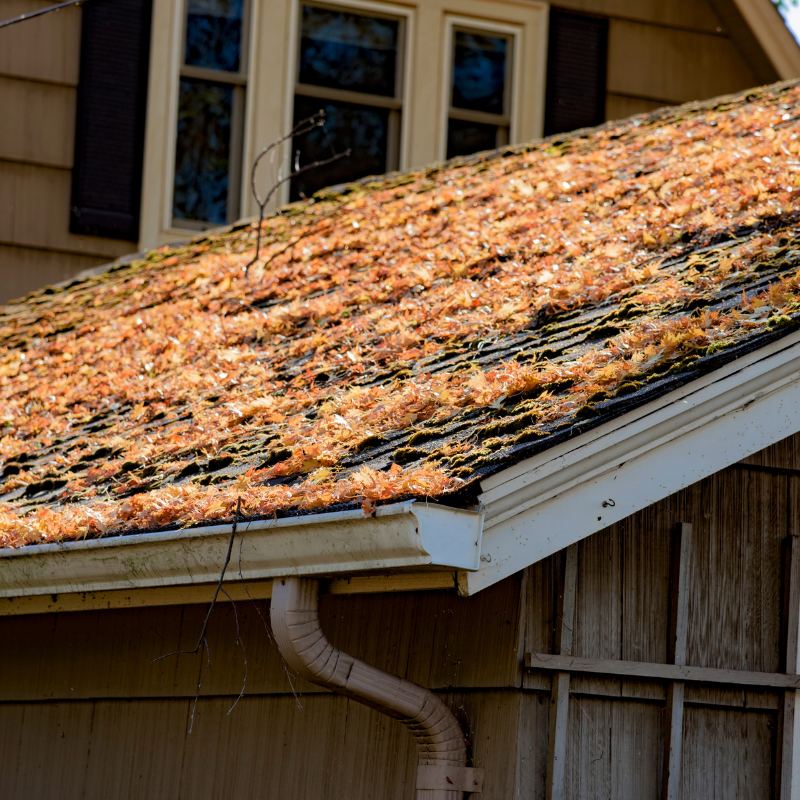
The established parts of Sandy have older roofs and mature planting, and that combination produces the classic problem: a roof that is already toward the end of its life, under trees, holding moss.
That is the situation where the honest answer is sometimes not to clean it. Treating moss on a roof with a couple of years left is tidying something that needs replacing. We would rather look and tell you that than take the job.
Older properties also tend to have had things added over the decades — extensions with their own rooflines, gutters that were run to suit a previous layout, downspouts discharging somewhere that made sense in 1978. Worth looking at as a system rather than a list of surfaces.
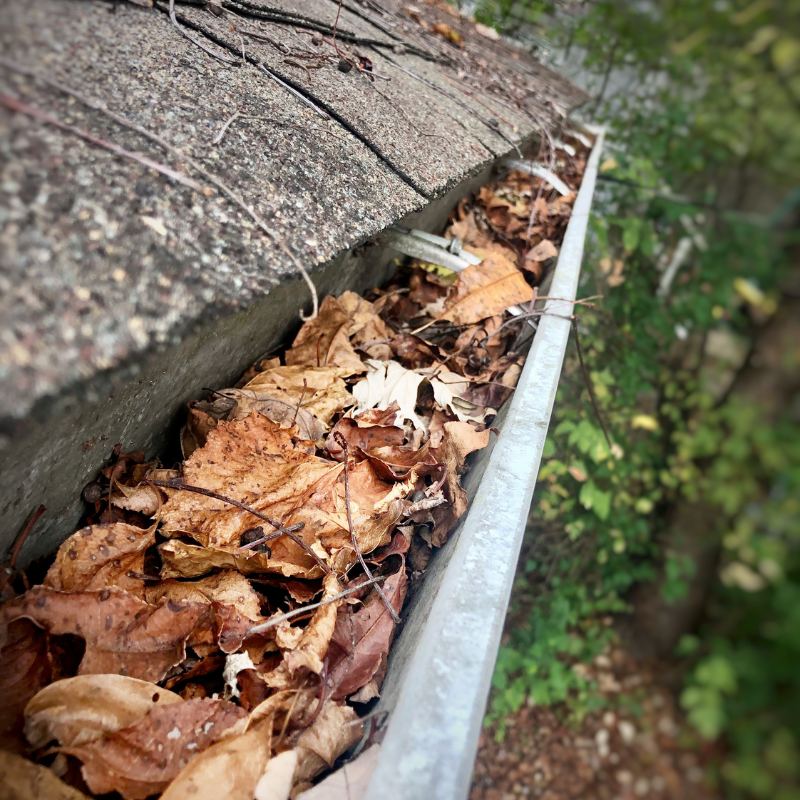
Out toward Cherryville and Bull Run the properties get big. Shops, barns, detached garages, long drives, and often a well and its associated equipment.
Outbuildings get forgotten, and they are frequently the ones with the worst gutters because nobody looks at them. A barn gutter that has been overflowing for five years will have done real damage to the fascia and possibly the wall below.
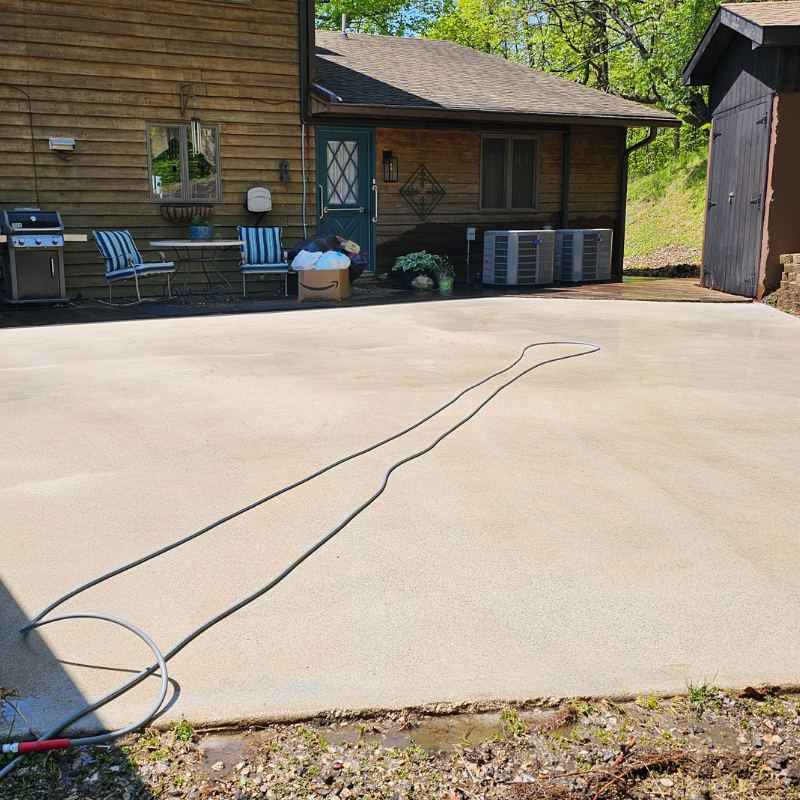
Long drives and large hard-surface areas are their own conversation. A hundred feet of gravel is not a pressure washing job; a hundred feet of concrete very much is, and worth pricing properly rather than by the square foot as if it were a patio.
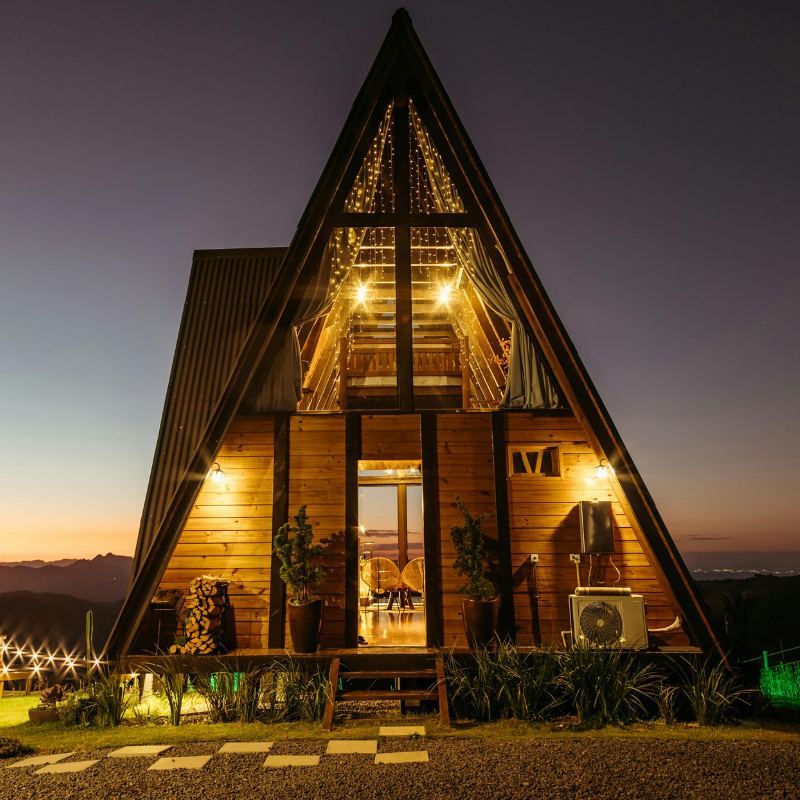
Sandy has an actual main street with actual storefronts, and winter here is dark and wet. A streaked frontage and a green entry walk read as closed even when the lights are on.
Storefronts, offices and the walkway customers arrive on are quick work with a disproportionate effect, and the right time for it is before the dark months rather than during them.
Sandy properties tend to have more fencing and more usable outdoor space than corridor properties, and those surfaces have their own pattern.
Fence panels go green on the shaded side and stay sound on the sunny one, which is why a fence often looks like two different fences. Cedar fencing in this climate silvers and grows a film rather than rotting quickly, and washing it usually reveals timber in far better condition than it appeared.
Decks in Sandy dry better than corridor decks, so they are a less frequent job, but the ones tucked behind a house or under a canopy behave like mountain decks and want the same attention.
Sandy is genuinely between two weather regimes, and that shows up in how work gets planned.
It gets more sun and less debris than the corridor, so intervals are longer. But it also gets the east wind coming down out of the Gorge in winter, and enough rain that surfaces never go properly dry for long. The result is a place where annual maintenance genuinely works, as long as it happens at the right point in the year.
For most Sandy properties that point is late summer to early autumn: hard surfaces cleaned before the wet months make them slick, gutters cleared once the debris has dropped, and any roof or elevation work done while there are still dry days to do it in.
Sandy's main street businesses have a narrow window where exterior work pays for itself, and it is before winter rather than during it.
Dark afternoons, constant wet, and a streaked frontage with a green entry walk reads as closed from a passing car. It is one of the cheapest fixes available and one of the few that changes how a business looks from the road rather than only how it looks up close. Late summer is the time.
The useful first question is which of the three Sandy situations you are in, because the answers differ.
An open-lot house in a newer subdivision: annual gutters, occasional wash, hard surfaces before winter. An older place near the centre under mature trees: shorter intervals and an honest look at the roof's remaining life before spending on it. Acreage out toward Cherryville or Bull Run: the house is the easy part and the outbuildings are the actual job.
Everything is quoted at the property, because the range here is genuinely wide — a compact house on an open lot and a place on five acres with a shop and a barn are not comparable jobs and no honest number covers both.
Call or send the form, tell us roughly what the property is and what you want looked at, and we will arrange a time. Quotes are free and there is no obligation attached to having us come out and look.
Services
Neighborhoods: Cherryville, Bull Run, Marmot
Reviews
Kris was easy to work with and quick to respond. We had him clean up our roof and clear out the gutters before the rain comes. He did a great job, communicated well, and best of all, we have a free flowing gutters now. Will definitely hire again.Jessica S.
Just had our roof cleaned by Kris Klug who owns "UNDER PRESSURE EXTERIOR CLEANING"! Highly recommend! Prompt! Courteous! Honest! And Reasonably priced!Steven G.
Oh my! Someone not on Mountain Time! Kris shows up and does a fantastic job! Hubby not on the roof this year, thank you Kris for your help!Cloanne G.
Good experience with UPMH, prompt response & fair price - roof and gutters now ready for winter. Would recommend !Miles W.
Professional estimate. Quick response. A fair price. We look forward to working with this company.Patricia E.
Reviews from Google · read them all
Nearby
Questions
Once a year for most properties on open lots, twice where there is real tree cover. It is genuinely less than up the corridor, which is one of the few maintenance advantages of being down the hill.
Yes, along with the rural properties in between. Longer drives and outbuildings are normal for us.
That is a question worth asking before spending anything, and we will give you a straight answer at the quote. If a roof has a year or two left, cleaning it is money spent on the wrong thing.
Yes — storefronts, offices and common areas. Frontages and entry walkways are the high-value bits and they are usually quick.
Get in touch
Need help with your roof, gutters, exterior cleaning, or holiday lights? Call or send us a message and tell us a little about what you're looking for. We're happy to help!
Call (503) 272-1238