 Free quote
Pressure Washing
Driveways, patios, walkways and decks pressure washed at the right pressure for the surface. Mt. Hood Corridor, Sandy, Gresham and Boring.
This is the one job where pressure genuinely is the answer — on horizontal surfaces, where the problem is a slick film of moss and algae bonded to concrete, pavers, stone or timber, and where the surface can take it.
Driveways, walkways, patios, pool surrounds, steps, decks and retaining walls. The pressure gets matched to the material rather than turned up to whatever the machine does.
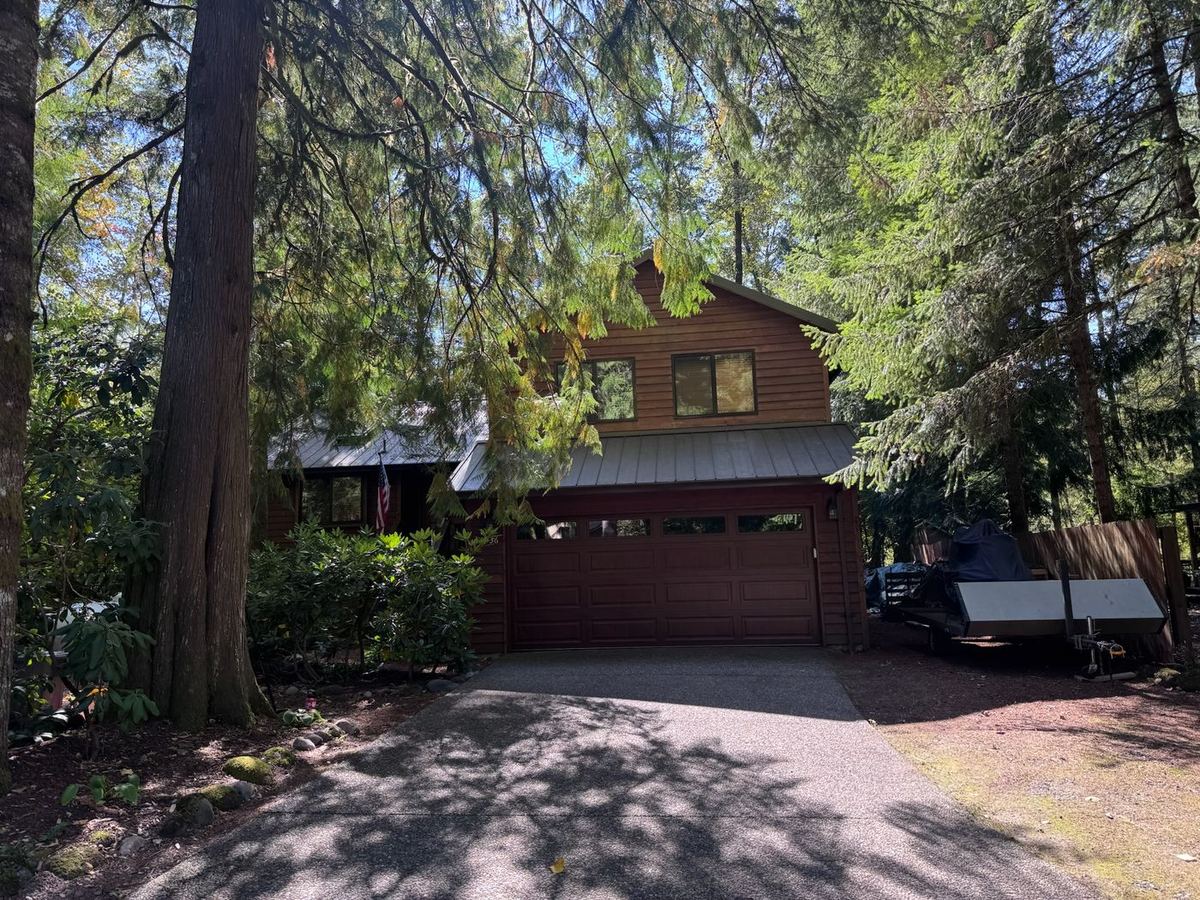
A green driveway is an appearance issue right up until it becomes a safety one. Wet moss on a sloped concrete walkway in a corridor winter is genuinely dangerous, and the corridor has a lot of sloped walkways.
This is the reason a good share of our pressure washing calls come in — not because somebody minded the look, but because a visitor slipped, or a handrail started to feel necessary on a path that never used to need one. Steps and anything on a grade are worth doing before the wet season rather than after somebody has gone down on them.
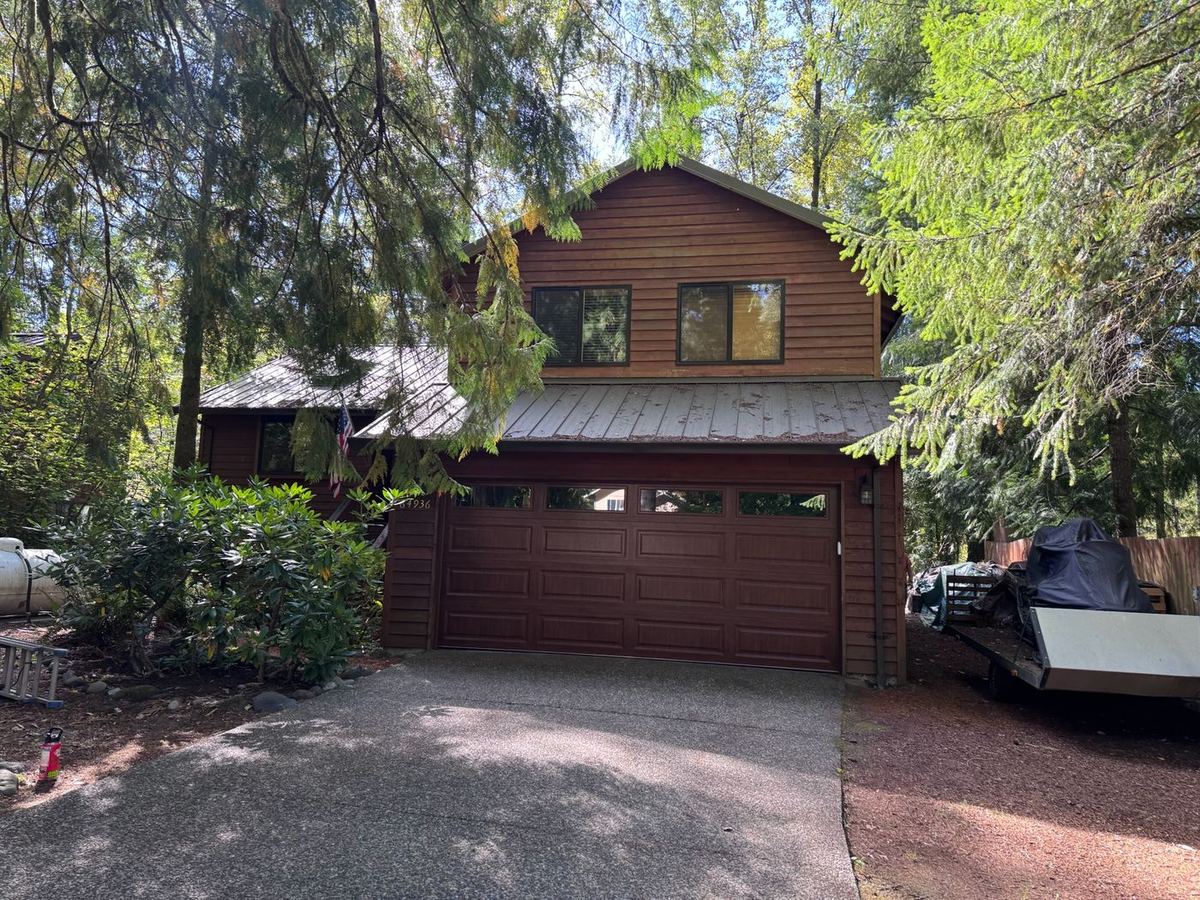
Concrete in sound condition takes real pressure and comes up dramatically. That is the satisfying one.
Pavers do not, at least not the same way. Too much pressure blasts the jointing sand out from between them, which loosens the whole field and leaves you with a re-sanding job you did not ask for. Pavers get cleaned at a lower pressure with a surface cleaner rather than a narrow jet.
Wood decking is the most abused surface in this trade. A narrow high-pressure jet on softwood decking carves visible stripes into the boards, raises the grain so the surface goes furry, and shortens the life of the timber. Composite decking has its own limits and manufacturers are specific about them. Both get a wider fan and less pressure.
Stone and stamped or coloured concrete need care too, because the sealer and the colour layer are thinner than they look.
The short version: the machine is capable of damaging every one of these surfaces, and knowing what each one will take is most of the skill.
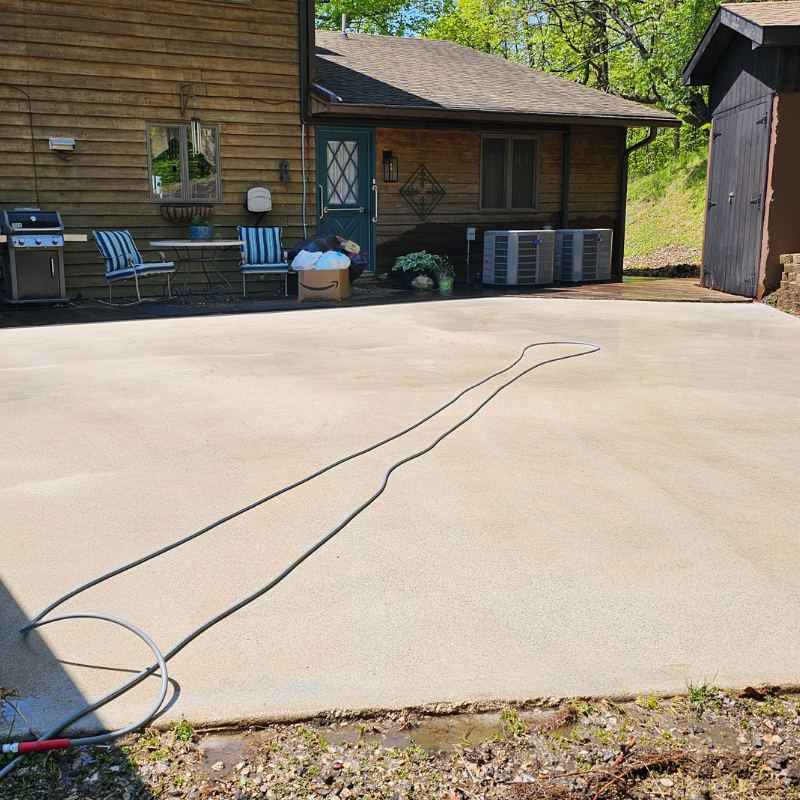
Moss and algae on a horizontal surface in this climate are not a one-off. The surface is shaded, it stays damp, and organic debris lands on it continuously.
Driveways in open ground in Sandy or Boring can go several years. A north-facing walkway under firs in Brightwood or Welches will be visibly green again inside a year or two. That is the climate rather than a failure of the cleaning, and it is worth knowing before you budget as though it is permanent.
Keeping debris off the surface makes a real difference. Most of what grows there is growing in a thin layer of accumulated needle litter rather than on bare concrete.
Washing a driveway moves a lot of water, and on the mountain it moves it toward ground that drains to the river. We keep chemical use to what the job needs, pre-wet and rinse the planting either side, and pay attention to where the runoff is actually heading rather than treating the nearest slope as away.
Once concrete or pavers are properly clean, people usually ask about sealing.
The honest answer is that it depends on the surface and on how much you mind doing this again. A sealer on sound concrete slows down how quickly moss and algae re-establish, and it makes the next clean easier because growth sits on the sealer rather than keying into the surface. On pavers it also helps hold jointing sand in place.
What it does not do is stop growth. In this climate, on a shaded surface, things will still colonise a sealed driveway — just more slowly and less tenaciously. Anybody telling you a sealer means never cleaning it again has not spent a winter here.
It also needs a genuinely dry surface and a dry spell afterwards, which is the real constraint on the mountain.
Part of the job is saying no.
Old, spalling concrete where the surface is already breaking up will lose more material under pressure, and cleaning it mostly demonstrates how bad it is. Cracked slabs let water underneath. Painted concrete that is already lifting will lift further. Soft, weathered decking past a certain point does not survive cleaning in a presentable state, and the right answer is replacement or refinishing rather than a wash.
Asphalt driveways are their own case: the binder is softer than people think and high pressure pulls aggregate loose.
Where we think the answer is no, or the answer is a lower pressure and a less dramatic result, we will say so before starting rather than afterwards.
Worth separating, because people often call about one and mean the other.
On a roof, moss is a slow structural problem and the treatment is chemical and patient. On a horizontal hard surface it is mostly a surface film bonded to concrete or stone, it is not damaging the substrate in the same way, and pressure genuinely removes it then and there.
That is why the two jobs have such different answers. It also means a walkway gets an immediate, dramatic result where a roof does not, which is worth knowing before you compare the two and wonder why one looked instantly better.
The best time for hard surfaces here is late summer into early autumn, and the reason is safety rather than appearance.
A driveway cleaned in September goes into the wet months with nothing growing on it, which is precisely when a slick surface matters — dark afternoons, constant damp, and everybody walking from a car to a door on a slope. Cleaning the same surface in February means you have already had the risky months.
If you only do this every few years, timing that visit for the end of summer gets considerably more value out of it than doing it in spring.
Included
Typical range: Quoted per property
Reviews
Kris was easy to work with and quick to respond. We had him clean up our roof and clear out the gutters before the rain comes. He did a great job, communicated well, and best of all, we have a free flowing gutters now. Will definitely hire again.Jessica S.
Just had our roof cleaned by Kris Klug who owns "UNDER PRESSURE EXTERIOR CLEANING"! Highly recommend! Prompt! Courteous! Honest! And Reasonably priced!Steven G.
Oh my! Someone not on Mountain Time! Kris shows up and does a fantastic job! Hubby not on the roof this year, thank you Kris for your help!Cloanne G.
Good experience with UPMH, prompt response & fair price - roof and gutters now ready for winter. Would recommend !Miles W.
Professional estimate. Quick response. A fair price. We look forward to working with this company.Patricia E.
Reviews from Google · read them all
Coverage
Questions
Sound concrete, no. Concrete that is already spalling, cracked or has a failing surface is a different conversation, and pressure will find those weaknesses rather than create them. We will look before starting and tell you if a surface is too far gone to clean safely.
Yes, at the right pressure and with a wider fan, and it is worth saying what the decking is when you call. If the boards are soft, splitting or the finish has largely gone, cleaning will make that obvious — sometimes that is exactly what you want before refinishing, and sometimes it is bad news delivered early.
Yes. Steps in particular are worth doing on safety grounds alone, and they are usually the greenest thing on a corridor property because they hold debris in every tread.
Most residential driveways are a few hours, depending on size, how long it has been and what the surface is. You get the price before we start, not after.
Roof and gutters first, then the house, then the hard surfaces. Anything washed off above lands below, so doing it in that order means the driveway is cleaned last and stays clean.
Get in touch
Need help with your roof, gutters, exterior cleaning, or holiday lights? Call or send us a message and tell us a little about what you're looking for. We're happy to help!
Call (503) 272-1238