 Free quote
Multnomah County
Gutter cleaning, roof moss treatment and house washing for Corbett and Springdale properties in the Columbia Gorge wind corridor.
Corbett sits on the bluff above the Columbia, and it has a weather problem that nothing else in our service area shares: wind. The Gorge funnels it, and Corbett and Springdale properties take it directly, year round, from the east in winter and the west in summer.
Everything about exterior maintenance here is downstream of that.
In Brightwood, debris falls onto a roof from the trees above it. In Corbett, a great deal of it arrives horizontally from somewhere else entirely.
That changes where it collects. Instead of an even layer across the roof and an even fill in the gutters, you get heavy accumulation on the sheltered side — whichever elevation is in the lee — and comparatively little on the exposed face. The gutter on the leeward side plugs while the windward one stays clear, which is why a quick look from one side of the house tells you nothing here.
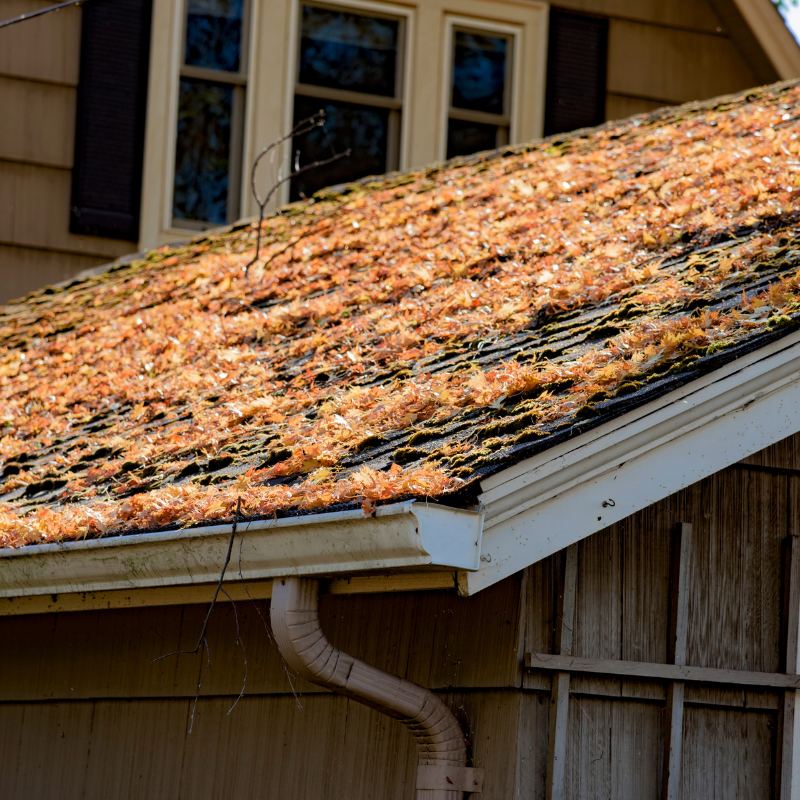
It also drives material into places that gravity would not. Debris packs into soffit vents, behind trim, under the first course of shingles, and into the tops of downspouts rather than settling gently along the trough.
The Gorge east wind in winter is the one that causes damage, and it does it by combining with freezing conditions in a way the corridor does not experience.
Freezing rain driven horizontally coats the windward elevation rather than landing on horizontal surfaces. Ice forms on walls, on the underside of eaves, and on the exposed face of gutters. A gutter with debris in it, holding water, in a hard east wind event, is where things get pulled off buildings.
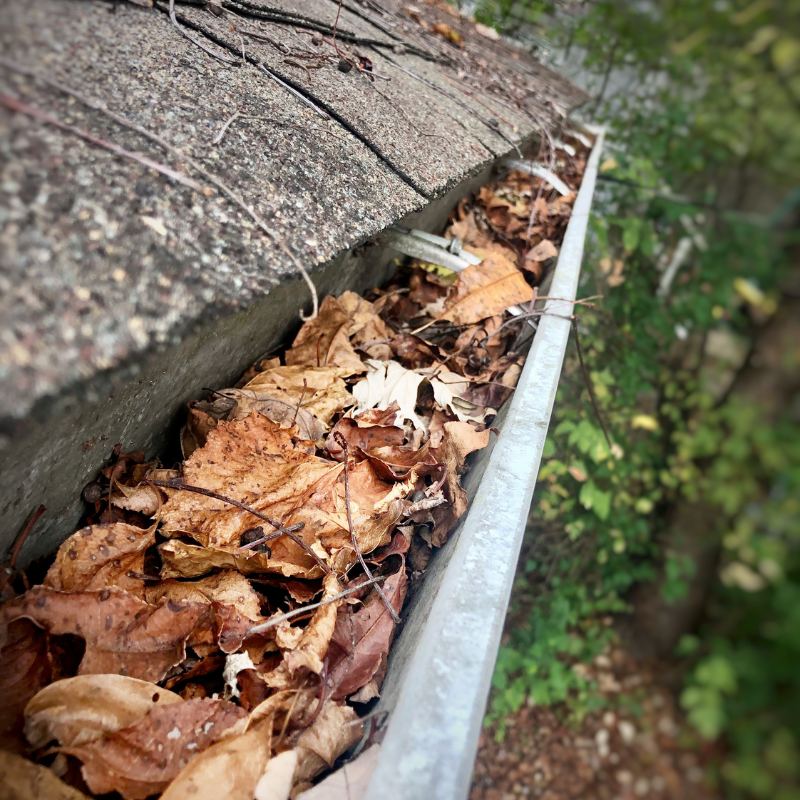
Clearing gutters before winter matters here for a different reason than at Rhododendron. Up the corridor it is about snowmelt having somewhere to go. In Corbett it is about not having a trough full of frozen material hanging off the windward fascia in a gale.
Constant wind is hard on paint and stain. It carries grit, it dries some elevations aggressively while the sheltered ones stay damp, and the result is a house that weathers unevenly — the exposed face chalky and worn, the lee face green.
That asymmetry is worth handling deliberately rather than treating the house as one surface. The sheltered elevations want washing more often; the exposed ones mostly want checking for failed finish before it lets water in.

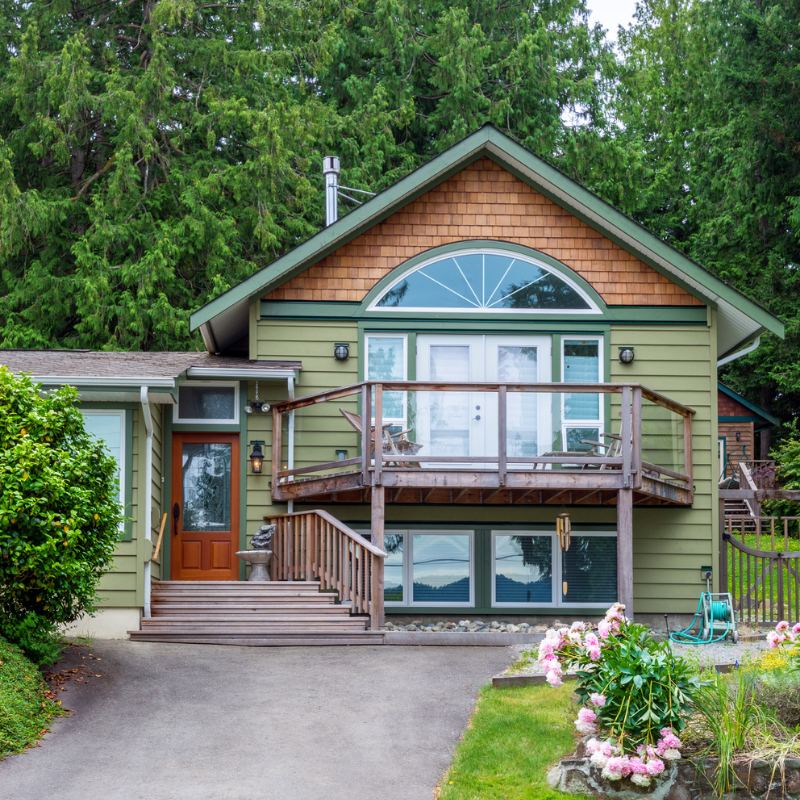
A lot of Corbett property is oriented toward the Gorge, which in practice means large windows and big open elevations facing the view and the weather at the same time.
Those elevations collect everything the wind carries and they are the ones people actually look at. They are also frequently the tall side of the building, because the ground falls away toward the river.
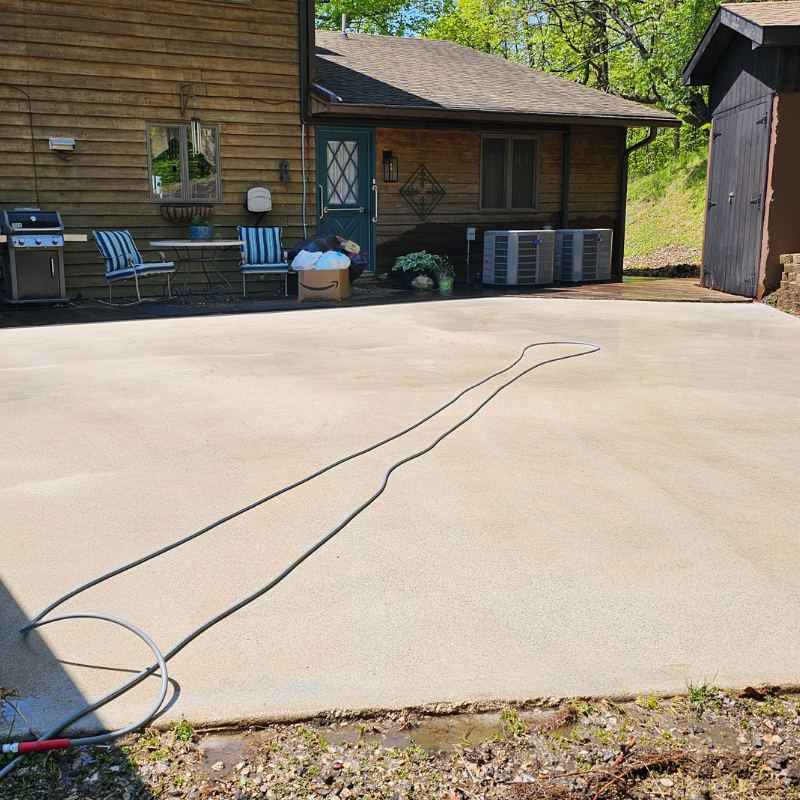
Corbett properties frequently have more than one building, and on an exposed site the secondary structures take the weather worst.
Shops, barns and detached garages here are often lighter-built than the house and sited without the same thought about wind direction. The result is a building whose windward face is scoured and whose lee face is permanently damp, with a gutter on one side doing all the work and the other doing none.
They also go unnoticed for longer. A house gutter that overflows gets seen from the kitchen window. A barn gutter that came off in a February gale can hang there for two years.
Corbett is the one place in our area where downspouts fail mechanically rather than simply blocking.
Wind works at anything that stands proud of a wall. Straps loosen, joints separate at the elbows, and a length of downspout that has come apart at the top delivers the entire roof's water straight down the elevation behind it. Because the separation is usually high up and on the sheltered side, nobody sees it — they just notice, eventually, that one part of the wall is always wet.
Checking that downspouts are still attached and still connected is a routine part of a Corbett visit, and it catches more problems here than anywhere else we work.
On most Corbett properties one elevation faces the Gorge, and that is the one with the glass, the height and the weather all at once.
It is also the one that matters, because it is what the house was built for. It takes the wind-driven grit, the horizontal rain and the winter ice, and because the ground usually falls away on that side it is frequently a full storey taller than it appears from the road.
Treat it as its own job rather than a quarter of the house. It needs doing more carefully, it takes longer, and the results are more visible than anything else on the property.
Scheduling in Corbett is partly a weather question, and the east wind season is the thing to plan around rather than work through.
Autumn, before the winter easterlies start, is when the gutter and downspout work wants doing — that is the job that prevents damage rather than improving appearance. Elevations and hard surfaces are better in late summer when there are settled days, because washing a tall exposed elevation in a Gorge wind is slow, wasteful and produces a worse result.
The gutter itself takes more abuse here than anywhere else we work. It stands proud of the building on the side the weather hits, it is fixed with hardware sized for the weight of water rather than the pull of a gale, and when it is full of wet debris in a freeze it becomes a heavy, rigid object hanging off a fascia board.
That is why the autumn clear matters more in Corbett than the appearance would suggest, and why we check the fixings rather than only the contents.
Services
Neighborhoods: Springdale
Reviews
Kris was easy to work with and quick to respond. We had him clean up our roof and clear out the gutters before the rain comes. He did a great job, communicated well, and best of all, we have a free flowing gutters now. Will definitely hire again.Jessica S.
Just had our roof cleaned by Kris Klug who owns "UNDER PRESSURE EXTERIOR CLEANING"! Highly recommend! Prompt! Courteous! Honest! And Reasonably priced!Steven G.
Oh my! Someone not on Mountain Time! Kris shows up and does a fantastic job! Hubby not on the roof this year, thank you Kris for your help!Cloanne G.
Good experience with UPMH, prompt response & fair price - roof and gutters now ready for winter. Would recommend !Miles W.
Professional estimate. Quick response. A fair price. We look forward to working with this company.Patricia E.
Reviews from Google · read them all
Nearby
Questions
Wind. The lee side collects debris and stays damp, so it grows more; the windward side gets scoured and dried but takes the weather damage. It is the standard Corbett pattern and it means the two sides genuinely need different attention.
Yes, Corbett, Springdale and the surrounding properties along the bluff.
Before the winter east wind season. A gutter full of wet debris on an exposed fascia in a freezing gale is how gutters come off buildings in this area.
Frequently the ground falls away toward the river, which makes one elevation considerably taller than it looks from the street. It is normal for us — worth mentioning the layout when you call so the visit is planned properly.
Get in touch
Need help with your roof, gutters, exterior cleaning, or holiday lights? Call or send us a message and tell us a little about what you're looking for. We're happy to help!
Call (503) 272-1238