 Free quote
Roof & Moss Treatment · Brightwood
Moss treatment and roof debris clearing for Brightwood homes and cabins under dense fir canopy. No pressure washing on shingles. Free quotes.
Brightwood grows moss on roofs better than anywhere else we work, and the reason is a combination no other part of the corridor has in quite the same measure: dense fir and hemlock canopy, a low river flat that holds damp air, and a constant supply of needle litter for moss to root into.
We clear the debris, treat the moss, and let it die back and weather off. We do not put a pressure washer on an asphalt roof here or anywhere.
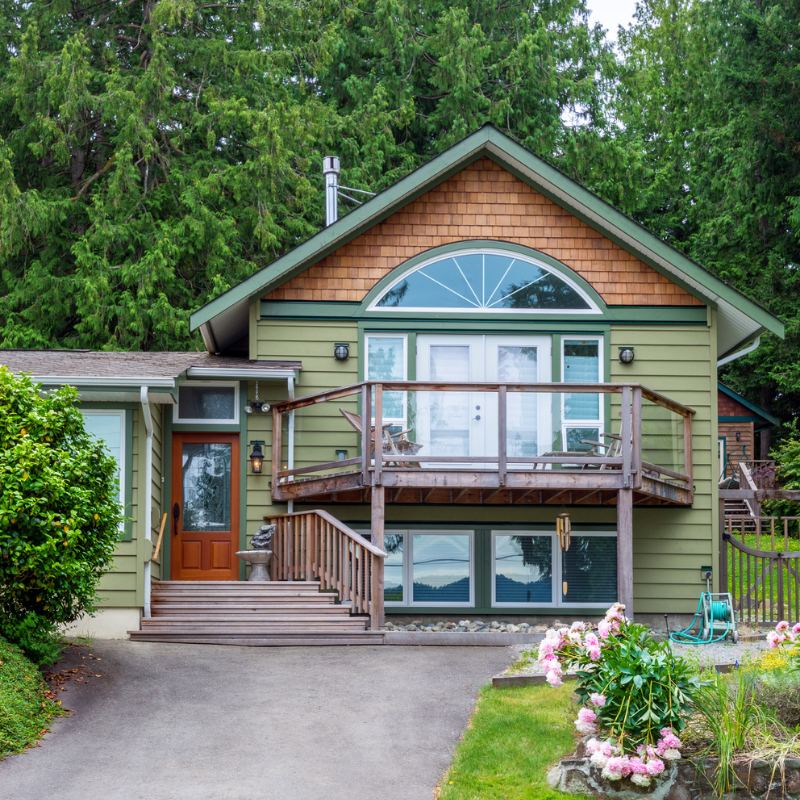
The usual rule is that moss takes the north slope first because it dries last. In most places that holds, and the south side of a roof stays comparatively clear.
On the Brightwood flat it frequently does not. Under heavy canopy, with cool air settling off the rivers, there may be no aspect of a roof that gets enough direct sun to matter. Plenty of properties here carry growth on all four slopes, and homeowners who have read that moss is a north-side problem are surprised by their own roof.
It is not a sign of anything wrong with the house. It is what happens to a roof that never fully dries in a climate that never stops supplying moisture.
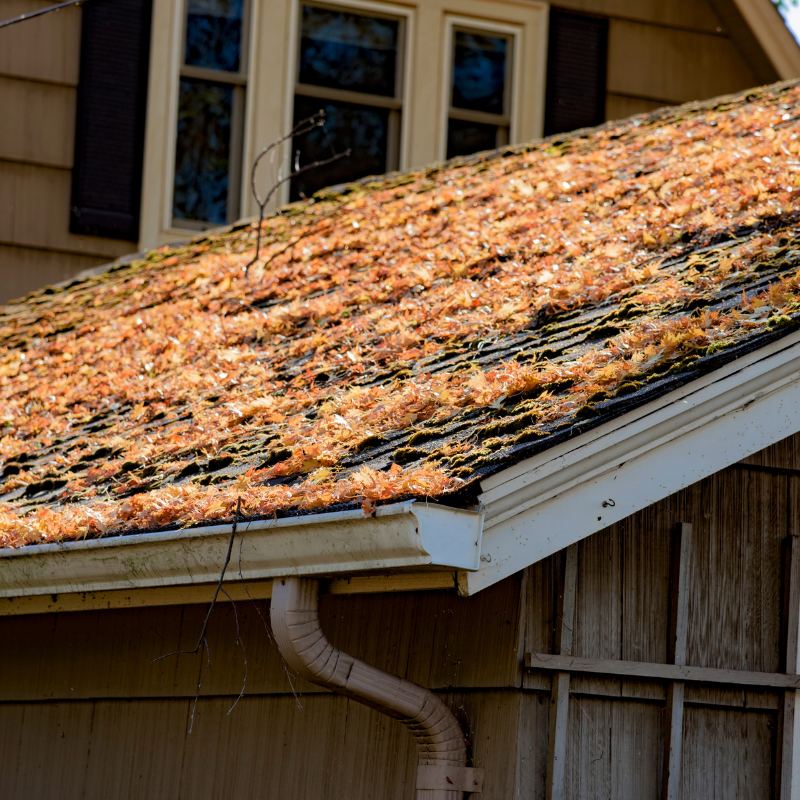
A great deal of what looks like moss on a Brightwood roof is needle litter with moss growing in it, and that distinction matters because removal is straightforward where treatment is slow.
Needle mats collect in valleys, along the low edge above the gutter, behind chimneys and around vents. They hold water against the shingle permanently, they feed the moss, and they are the reason growth returns quickly after a treatment that did not address them.
Clearing that material makes an immediate and visible difference, and it is what makes the treatment last. On a property under this much canopy it also needs doing more often than the treatment itself.
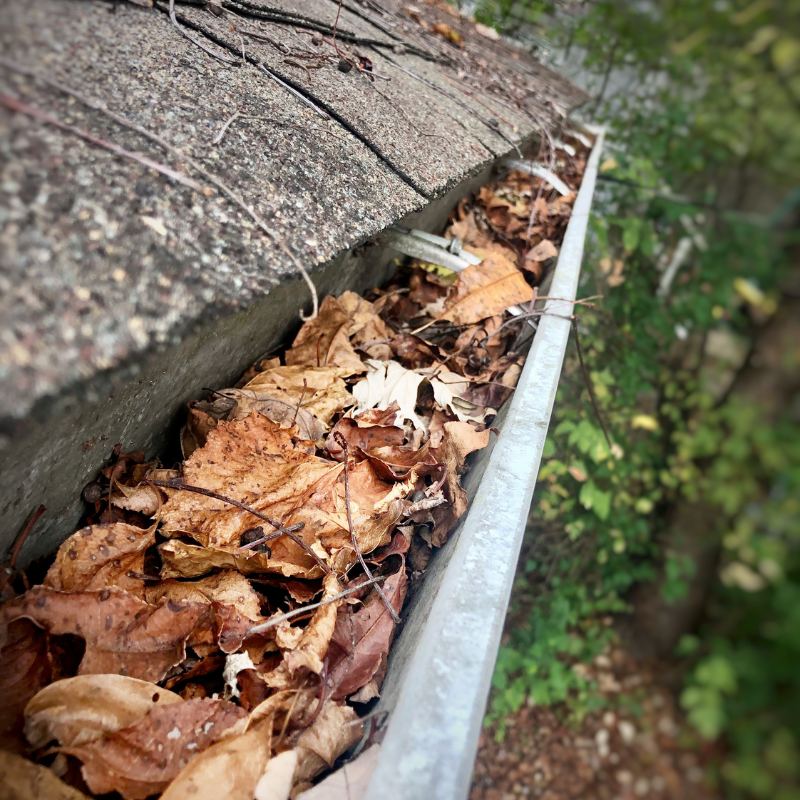
Worth being straight about expectations. A treated roof in Sandy might go several years before it needs attention again. A treated roof in Brightwood, under the same product, will not.
The conditions that produced the moss have not changed — the trees are still there, the flat is still damp, and needles are still falling. Treatment buys time and prevents damage; it does not convert a shaded river-flat roof into a sunny one.
For most Brightwood properties the realistic pattern is debris clearing on the regular gutter visits, with moss treatment as a periodic job on top of that rather than a one-off cure.

Some Brightwood roofs we quote have had moss lifting shingle edges for several winters, and at that point cleaning is tidying something that needs replacing.
Curling shingles, bald patches where the granules have gone, soft spots underfoot, moss visibly growing underneath a lifted course rather than on top of it — those are roofer problems. We will say so at the quote rather than take money for treating a roof with two years left in it.
There are a good number of cedar shake roofs on the Brightwood flat and they cannot be treated like composition.
Cedar is organic, so moss does not merely sit on it — it holds water against timber, and wet timber rots. At the same time shake is more fragile underfoot and far less tolerant of aggressive chemistry. Products that are fine on an asphalt roof can strip the natural oils out of shake and leave it grey and brittle, which shortens its life considerably more than the moss was going to.
So shake gets handled more gently, and the debris clearing matters even more, because material trapped between the courses is what keeps the timber permanently damp. If your roof is shake, say so when you call.
The single biggest factor in how often a Brightwood roof needs attention is not the roof, it is what is directly above it.
A house with mature firs overhanging the roofline accumulates continuously and is effectively on a debris-clearing cycle rather than an occasional one. A house on the same road with a clear gap above it can go substantially longer.
We can only tell which you have by looking, and the first visit is the honest measure — if a season's worth of material comes off six months after the last clean, that is the interval your property actually needs rather than the one you hoped for.
Local conditions
Brightwood's dense fir canopy and damp river flat mean moss grows on every roof aspect here, not just the north slope, and it returns faster than anywhere else on the corridor.
Reviews
Kris was easy to work with and quick to respond. We had him clean up our roof and clear out the gutters before the rain comes. He did a great job, communicated well, and best of all, we have a free flowing gutters now. Will definitely hire again.Jessica S.
Just had our roof cleaned by Kris Klug who owns "UNDER PRESSURE EXTERIOR CLEANING"! Highly recommend! Prompt! Courteous! Honest! And Reasonably priced!Steven G.
Oh my! Someone not on Mountain Time! Kris shows up and does a fantastic job! Hubby not on the roof this year, thank you Kris for your help!Cloanne G.
Good experience with UPMH, prompt response & fair price - roof and gutters now ready for winter. Would recommend !Miles W.
Professional estimate. Quick response. A fair price. We look forward to working with this company.Patricia E.
Reviews from Google · read them all
Questions
Because it strips the granules that are the shingle's entire weather protection, and it drives water up under the courses into the underlayment. It looks spectacular for one season and takes years off the roof. It is the single most damaging thing commonly sold as roof cleaning.
Debris removal is immediate. The moss itself dies over weeks and weathers off over months of subsequent rain. Anyone promising an instantly clean roof is describing a pressure wash.
Debris clearing, effectively yes, and it rides along with the gutter visits. Moss treatment is less frequent than that but more frequent than the label suggests, because the conditions here are at the extreme end.
That is the sensible order and it is how most Brightwood properties should be done. Roof debris first, gutters after, so the material loosened off the roof does not immediately refill a trough you have just cleared.
Get in touch
Need help with your roof, gutters, exterior cleaning, or holiday lights? Call or send us a message and tell us a little about what you're looking for. We're happy to help!
Call (503) 272-1238